What Is FOMO in Trading, and How Traders Actually Beat It
Every losing pattern in retail trading has a fancy name. FOMO is the honest one: you bought because it was going up and you couldn't stand watching. Here's the mechanics of the mistake, and the rules that reliably interrupt it.
Curious? The app, 10% cheaper →
Disclosure & risk: Some links are referral links (we may earn a commission). Trading is high-risk. Not financial advice.
FOMO, fear of missing out, is when you enter a trade because the price is already running and everyone around you seems to be printing, not because any plan told you to. It produces late entries at the worst prices with remarkable consistency. And the fix isn't willpower. Willpower loses to a green candle every single time; rules you wrote down yesterday don't.
The mechanics of a FOMO trade
The sequence is almost always the same. A token, stock or coin makes a fast visible move. Screenshots of gains circulate. The price keeps climbing, and each green candle raises the emotional cost of staying out: until you buy, not at the start of the move, but near its end. The people selling to you are the early entrants taking profit. When the move stalls, you're holding a position you never planned, with no exit rule, bought at the top of someone else's trade.
The math is what kills you: the trigger for your entry was other people's visible profit, which by definition means the profit has already happened. Systematically buying after the move is a negative-expectancy loop, and no amount of conviction fixes the timing.
Three patterns to recognize in yourself
Five rules that actually work
- Written entry criteria. Before the session, write what a valid entry looks like. If the trade in front of you doesn't match the paper, it doesn't exist. The rule's job is to make "it's pumping" insufficient.
- The 10-minute timer. When you feel the pull of a running chart, start a timer and do nothing until it rings. Most FOMO impulses don't survive ten minutes; the trades that still make sense afterwards are the ones worth considering.
- Fixed position size, decided in advance. FOMO's damage scales with size. A pre-set maximum per position: small enough that a total loss doesn't change your week: caps the cost of the impulses that get through.
- A trade-count budget. Give yourself N trades a day (three is plenty for most people). Scarcity forces selection; selection is the opposite of FOMO.
- The post-trade audit. Log every entry with one honest sentence: "planned" or "chased." Nothing kills the pattern faster than watching your own chased-trade win rate over a month.
About the app literally named Fomo
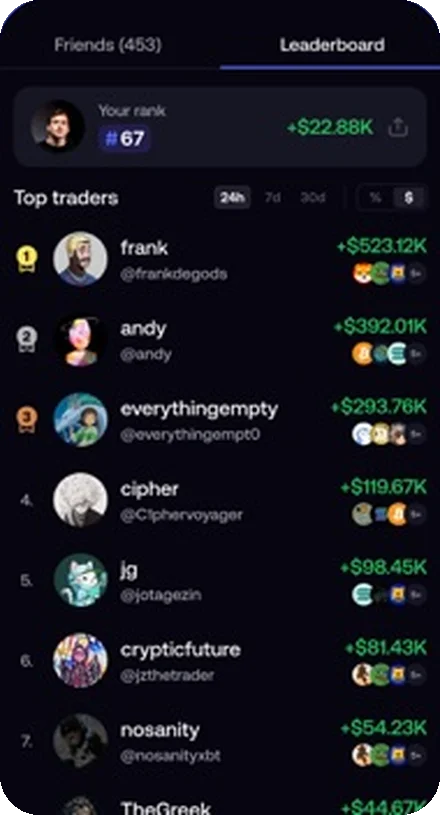
There's an irony worth naming: one of the fastest-growing crypto trading apps is called Fomo, and its core feature, a live feed of other traders' buys and sells: is the feed spiral from pattern #2, productized. That doesn't make it bad; it's genuinely the slickest way to trade Solana tokens from a phone, and watching skilled traders' entries in real time is a legitimate idea source. But it means the rules above aren't optional there: set your size limits before opening the feed. If you do want to try it, our step-by-step Fomo walkthrough covers setup, and signing up with code ThenFarYak via this link takes 10% off the trading fees permanently.